The Louvre Museum: A Monument of Art, History, and Culture
The Louvre Museum, or Musée du Louvre, is not just the most visited museum in the world; it is one of the most iconic cultural institutions in human history. Located in the heart of Paris, on the right bank of the River Seine, the Louvre is a beacon of art, history, architecture, and civilization that draws over ten million visitors each year. Its majestic halls and corridors house more than 35,000 works of art, from prehistoric artifacts to contemporary masterpieces, making it an essential destination for anyone who appreciates the breadth and depth of human creativity.
The origins of the Louvre stretch back to the late 12th century, when it was first constructed as a fortress by King Philip II to protect Paris against potential invasions. Remnants of this original medieval structure can still be seen in the museum’s basement today. In the 16th century, under the reign of Francis I, the fortress was transformed into a royal residence. Francis I was also the monarch responsible for acquiring what would become the museum’s most famous piece: Leonardo da Vinci’s Mona Lisa.
The Louvre continued to serve as a royal palace until the late 17th century, when Louis XIV relocated the royal court to the Palace of Versailles. Following the French Revolution, the Louvre was repurposed as a public museum, officially opening its doors to the public in 1793. From then on, it steadily expanded through the acquisition of artworks via royal collections, war booty, archaeological expeditions, and generous donations.
Architecture and Layout
One of the most striking features of the Louvre is its architectural evolution. The complex consists of three main wings: Denon, Sully, and Richelieu, each containing various departments and masterpieces. The museum covers an area of more than 72,000 square meters and boasts one of the most diverse collections in the world.
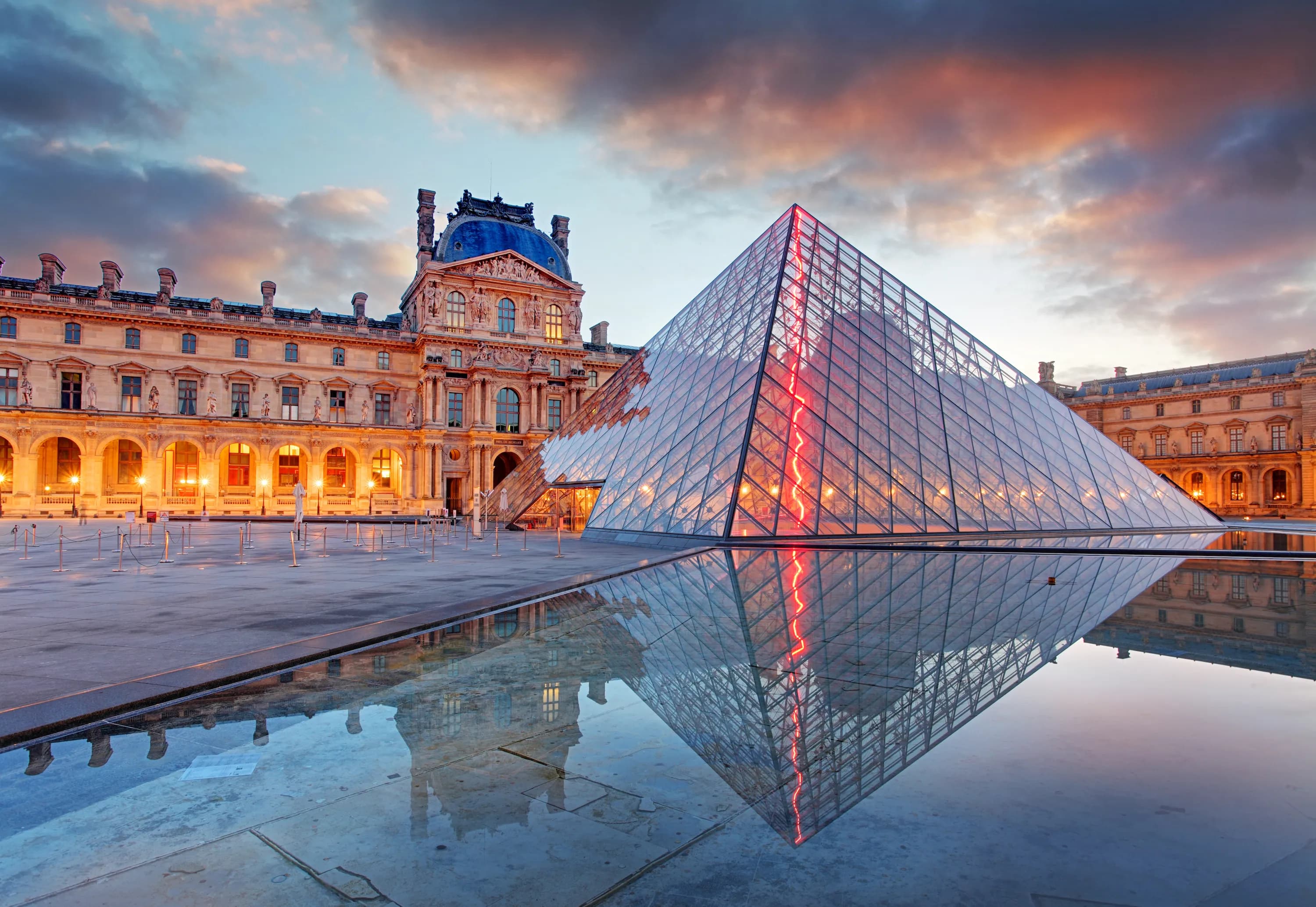
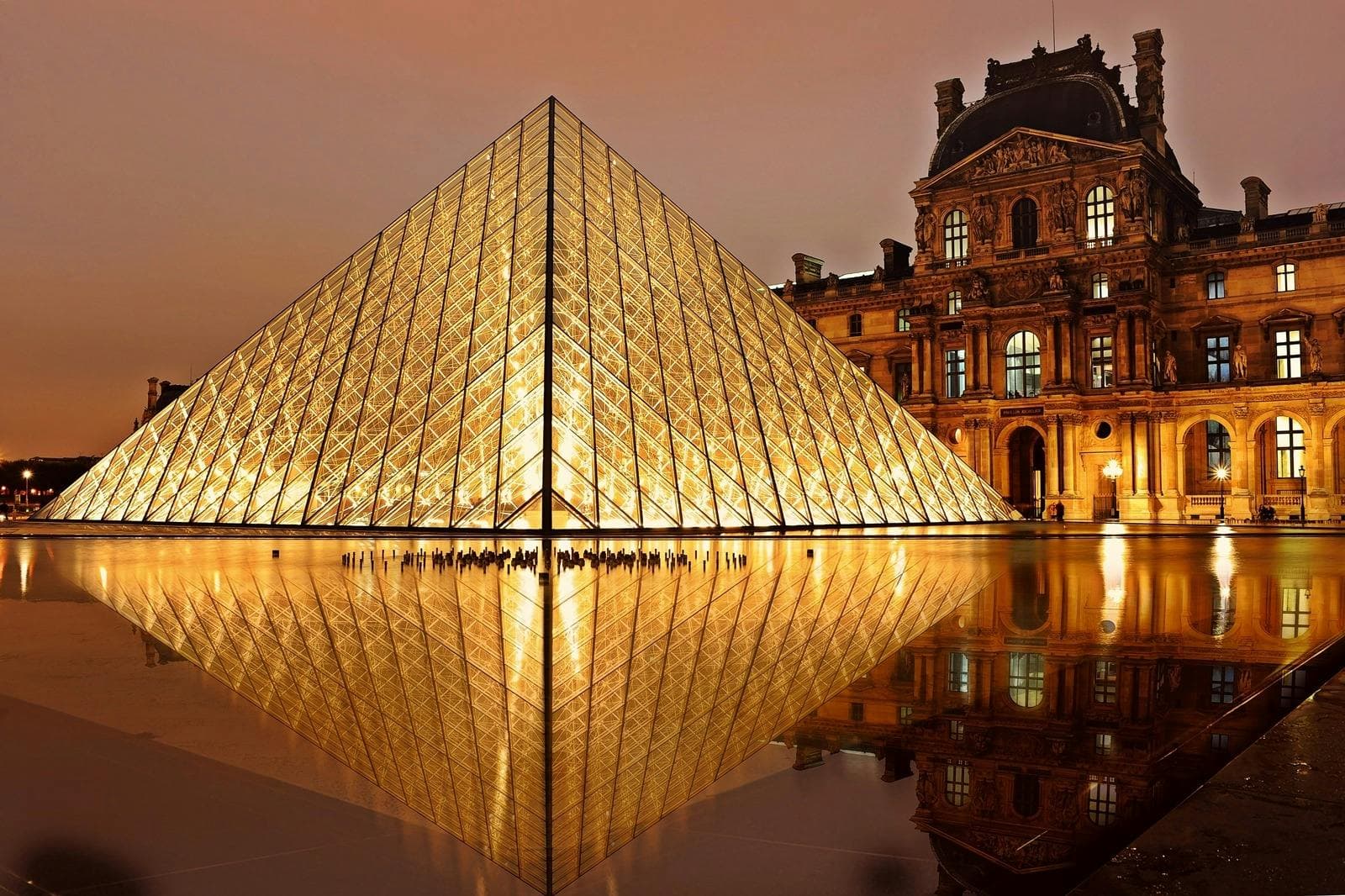
The modern glass pyramid entrance, designed by Chinese-American architect I. M. Pei and inaugurated in 1989, sits in the Cour Napoléon courtyard and has become a globally recognized symbol of the museum. While it initially sparked controversy, the pyramid now seamlessly bridges the museum’s historic grandeur with contemporary aesthetics.
Collections and Departments
The Louvre’s collection is divided into eight curatorial departments:
Egyptian Antiquities: This department showcases artifacts from the Nile civilizations, including statues, mummies, jewelry, and everyday items. The Seated Scribe and the Great Sphinx of Tanis are among its most notable exhibits.
Near Eastern Antiquities: Spanning Mesopotamia, Persia, and the Levant, this collection includes cuneiform tablets, ceremonial artifacts, and monumental sculptures like the Code of Hammurabi.
Greek, Etruscan, and Roman Antiquities: Visitors can explore classical sculptures, pottery, and frescoes, including the Venus de Milo and Winged Victory of Samothrace.
Islamic Art: Covering a vast geographical area from Spain to India, the Islamic art collection includes ceramics, textiles, metalwork, and architectural fragments.
Sculpture: Non-antique sculpture highlights include works from the medieval period to the 19th century. The department features masterpieces by Michelangelo, Jean-Baptiste Carpeaux, and others.
Decorative Arts: This section includes items such as tapestries, furniture, jewelry, and clocks. It offers a vivid glimpse into the opulence of royal courts and noble households.
Paintings: The Louvre’s painting collection is among the most important in the world, spanning from the 13th century to 1848. It includes Italian Renaissance, Flemish, Dutch, and French masterpieces. Besides the Mona Lisa, highlights include Eugène Delacroix’s Liberty Leading the People, Géricault’s Raft of the Medusa, and Vermeer’s The Lacemaker.
Prints and Drawings: Stored in the Richelieu wing, this department comprises graphic works, sketchbooks, and manuscripts from the Middle Ages to the 19th century. It is accessible by appointment for research purposes.
The Mona Lisa and Iconic Works
No visit to the Louvre is complete without seeing the Mona Lisa. Painted by Leonardo da Vinci in the early 16th century, this enigmatic portrait is perhaps the most famous artwork in the world. Housed in a climate-controlled, bulletproof glass case, the painting attracts millions of visitors annually who are drawn to her mysterious smile and captivating gaze.
Visitor Experience
Navigating the Louvre can be overwhelming due to its vastness. However, the museum provides various amenities to enhance the visitor experience. Maps, audio guides, and themed tours are available in multiple languages. There are also dedicated trails for families, children, and visitors with limited mobility.
The Louvre’s underground shopping mall, Carrousel du Louvre, includes boutiques, bookshops, and restaurants. The museum also offers quiet spots and resting areas for visitors who wish to pause and reflect.
Cultural and Global Significance
The Louvre plays a pivotal role in global art preservation and scholarship. It collaborates with institutions worldwide, lending artworks and expertise. The museum has also taken a leading role in the fight against art trafficking and the restoration of looted artifacts.
In recent years, the Louvre has expanded its presence internationally. The Louvre Abu Dhabi, opened in 2017, represents a partnership between France and the United Arab Emirates and is the first universal museum in the Arab world.